


Características
Volunteering in Uruguay
Practice Spanish and immerse yourself in Uruguayan culture through meaningful volunteer work.
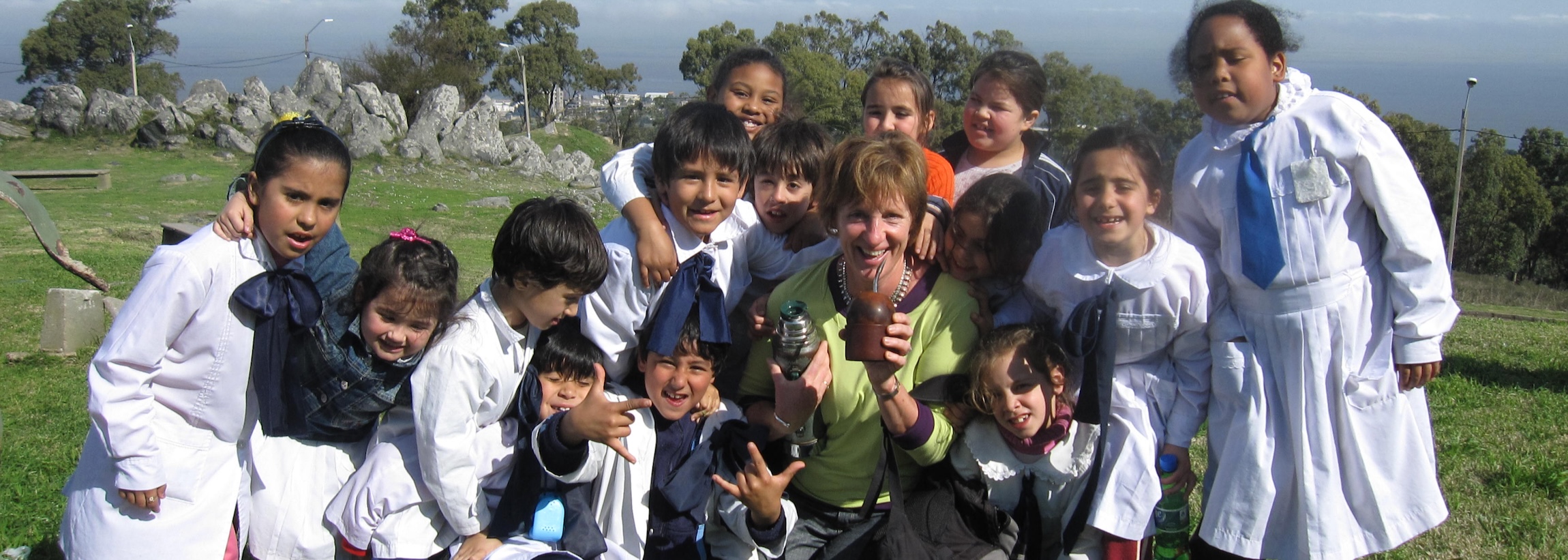
At Academia Uruguay, we offer students the opportunity to combine Spanish language courses with volunteer placements in Montevideo. Volunteering allows you to explore local issues, contribute to community-based projects, and experience Uruguay from the inside—through real, human connections and full cultural immersion.
Why Volunteer?
Volunteering is a life-changing experience—not only for those you help, but for you as well. It’s about offering your time, skills, and energy to people who truly benefit from your support. In return, you’ll gain valuable insights, develop new skills, meet people from diverse backgrounds, and learn to appreciate different ways of life.
We believe that everyone has something to contribute and can make a positive impact. Volunteering is about working together to create meaningful change.
What Does Volunteering Involve?
In short, to volunteer means to freely contribute your time, knowledge, and ideas—without expecting anything in return. It’s about recognizing that individual actions contribute to a larger purpose: the well-being and progress of a social group.
As a volunteer, you’ll be fully immersed in local life and actively engaged in hands-on experiences that support community development.
Program Requirements
Our volunteer program is free for students who meet the following criteria:
- Enroll in at least three weeks of Spanish classes at Academia Uruguay
- Commit to at least four weeks of volunteer work
- Have a minimum Spanish level of B1 (Intermediate)
If you already have the required language level, you can start volunteering alongside your classes. If not, we recommend taking several weeks of Spanish lessons beforehand. This ensures a meaningful exchange with local staff, other volunteers, and the people you’ll be working with.
How to Apply
When you contact us, please include a brief description of:
- The type of volunteer work you’re interested in
- Your goals and expectations
- Your availability
We’ll respond with detailed program information and a Spanish placement test. You’ll need to complete and return the test before arrival. Once we review your results, we’ll confirm whether you can start volunteering immediately or need additional Spanish instruction first.
First Day & Task Assignment
Your first day will typically be an orientation—an opportunity to get to know the organization, its mission, and the people you’ll be working with.
After that, your tasks will be assigned based on:
- The current needs of the organization
- Your availability and Spanish proficiency
- Your interests and background
As your Spanish skills improve, you’ll be able to take on more complex responsibilities—making your volunteer experience even more rewarding and impactful.Join us in Montevideo and become part of something meaningful.
Your time and energy can make a real difference.
- Level assessment (oral and written) before starting
- Study materials (textbooks and other resources)
- Access to the online platform up to level intermediate B1 if requested
- Optional exams at the end of each level and at the end of your stay
- Certificate stating the number of hours completed and level attained (including grade if the exam is passed)
- Two to three extracurricular activities per week (guided tours, museum visits, tango, workshops, excursions, etc.)
- Wi-Fi access
- Hot and cold beverages
- Access to the library
- Movie screenings and discussions (usually once a week)
- Assistance with organizing trips around Uruguay and Latin America
- 24-hour hotline available in Spanish, English, French, and German
Student Stories

Frequently Asked Questions
Yes. Montevideo is an excellent place to learn Spanish, especially for students who want real immersion in a vibrant, lived-in city. As Uruguay’s capital, it offers cultural life, universities, music, cafés, and an active social scene—without feeling overwhelming. Students quickly become part of daily life: chatting in neighborhood bars, walking along the Rambla, joining local events, or meeting Uruguayans in shared spaces. These everyday interactions naturally turn into Spanish practice. Montevideo combines urban life with accessibility, making it easy to study, socialize, and use Spanish consistently from the first week.
Spanish in Montevideo belongs to the Rioplatense variety, shared with Argentina, but with its own recognizable sound and usage. Uruguayan Spanish uses voseo (vos instead of tú) and features a distinctive pronunciation of “ll” and “y,” often softer and less emphatic than in Buenos Aires. Grammar and core vocabulary are fully standard, making this Spanish easy to understand across Latin America and Spain. For learners, Montevideo offers exposure to a regional accent that is authentic, modern, and internationally useful.
Yes—language learning is driven far more by motivation, consistency, and curiosity than by age. Montevideo attracts students of all ages, including professionals on career breaks, university graduates, remote workers, and retirees. At our school, age diversity is the norm. Some learners come with prior language experience, others are starting fresh, and progress varies individually. What matters most is engagement: attending class regularly, practicing outside the classroom, and staying open to making mistakes. We have seen highly motivated students in their 60s and 70s progress faster than younger learners who study less consistently.
Yes. Many students arrive in Uruguay with little or no Spanish, and Montevideo is a welcoming place to start.Uruguay ranks among the top countries in Latin America for English proficiency, particularly in Montevideo. Basic English is commonly spoken in services, and locals are generally patient and supportive when someone is learning Spanish. We can arrange airport pickup, and host families are used to communicating with beginners. At school, our team is experienced in guiding students through their first days, helping them build confidence quickly and transition into Spanish naturally.
Progress depends on your background, learning habits, and how much you use Spanish beyond the classroom.Students who practice socially, live with host families, or interact regularly with locals tend to advance faster. For beginners starting from zero, typical progress aligned with the CEFR is: After 2–3 weeks: You manage basic communication, introductions, and everyday situations. After 2–3 months (around 200 hours): You can function comfortably in familiar contexts and understand much of daily spoken Spanish. After 5–6 months: Many students reach an independent level (B1–B2), allowing confident communication and comprehension of more complex topics. Montevideo’s strong social culture makes it easy to practice Spanish naturally outside class.
Montevideo offers good value compared to many large cities in Europe or North America, though costs vary depending on lifestyle and economic context. Groceries can be similar in price to Europe, but housing is often more affordable, and public transportation is reliable and inexpensive. Social life—cafés, restaurants, cultural events, and live music—is accessible and part of everyday life. For many students, Montevideo combines quality of life, safety, and cultural richness at a reasonable overall cost.
Uruguayan Spanish includes many unique words and expressions that are uncommon or used differently in other Spanish-speaking countries. One of the most distinctive is “bo”, an informal word similar to “hey” or “mate” in English, frequently heard in everyday conversations in Montevideo. Another very common term is “ta”, which can mean “okay,” “that’s fine,” or “done,” depending on context. Uruguayans also use “bondi” for bus, “championes” for sneakers, and “gurí” to refer to a child. The influence of Italian and Rioplatense culture is noticeable in expressions like “qué lo tiró” (used to show surprise) and the widespread use of vos instead of tú (voseo). These local words and expressions are part of daily life in Uruguay and are especially common in Montevideo, making Uruguayan Spanish sound friendly, informal, and distinctly regional.
No. From the very first class, instruction is conducted mainly in Spanish. English is used only when it’s absolutely necessary to clear up a specific doubt. Our teachers are trained to make Spanish accessible without relying on translation. They use repetition, body language, visual support, and simple sentence patterns that gradually become more complex. This immersion-based method helps students begin to think naturally in Spanish rather than translating from English. After teaching more than 20,000 students in Montevideo, we’ve seen how effective this approach is. Learning Spanish in Spanish builds confidence early on and leads to stronger, more natural communication skills—both inside and outside the classroom.